


Outdoor public lighting plays an irreplaceable role in urban road safety, night landscape maintenance, and public area operation stability. Most city managers, property operators and road construction teams only focus on initial purchase prices when choosing lighting equipment, ignoring hidden power consumption losses, frequent maintenance troubles, short service life and unstable night brightness. These overlooked problems gradually lead to rising annual operation expenses, frequent street light failures and potential safety hazards on roads at night. Choosing reliable and durable solar integrated street lights becomes the core solution to comprehensively optimize outdoor lighting systems and reduce comprehensive operating burdens.
Many traditional mains-powered street lights suffer from complex wiring construction, high electricity bills, frequent line aging faults and harsh requirements for construction terrain. In remote mountain roads, suburban branches, park paths and rural road sections, laying power cables brings huge engineering costs and later maintenance risks. Professional outdoor lighting manufacturers have upgraded integrated solar lighting structures to break terrain restrictions, avoid complicated cable layout, and achieve fully independent power supply without relying on urban power grids. A professional solar lighting enterprise adopts optimized photovoltaic power generation matching technology, which ensures stable lighting even in continuous cloudy and rainy weather, fundamentally solving the power supply instability problem that plagues ordinary solar street lights.
The most common hidden trouble of low-quality solar street lights lies in mismatched battery configuration and insufficient photoelectric conversion efficiency. Cheap products use low-capacity batteries and inferior solar panels, which cause rapid power attenuation, dim light at midnight, automatic shutdown in rainy days, and frequent battery replacement. Users often spend a lot on repairing lights within 1–2 years, making the so-called energy-saving products become high-cost consumables. High-grade solar street lights adopt high-conversion monocrystalline silicon panels, large-capacity lithium iron phosphate batteries and intelligent charge-discharge control chips, balancing daytime energy storage and nighttime power output to maintain constant brightness throughout the whole night.
Unreasonable brightness adjustment design also creates unnecessary energy waste and shortened lamp life. Ordinary fixed-brightness street lights keep full power output all night long, wasting plenty of electricity in late night with little pedestrian and vehicle traffic. Intelligent human-sensing solar street lights automatically adjust brightness according to actual road flow, turning to low-power standby mode when no people or vehicles pass, and instantly boosting high-brightness lighting when sensing moving objects. This intelligent mode greatly extends battery cycle life, reduces light attenuation speed, and ensures safety while maximizing energy-saving effects.
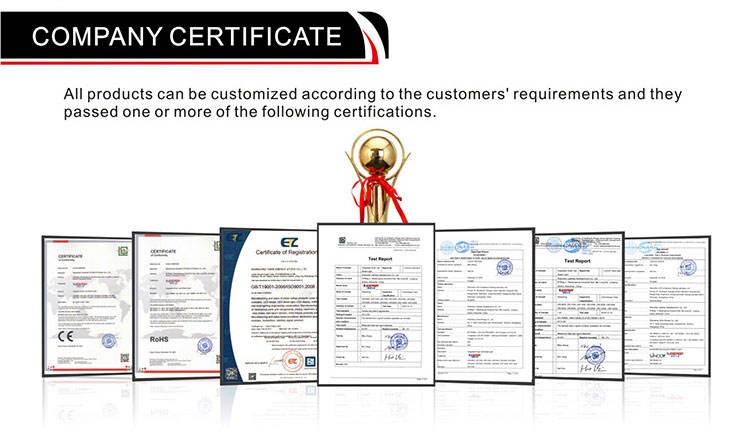
Harsh outdoor natural environments severely test the waterproof, dustproof, corrosion-resistant and wind-resistant performance of street lamps. Long-term exposure to rain, snow, ultraviolet radiation, sandstorms and high humidity easily causes lamp shell cracking, circuit short circuit, panel aging and lamp holder rust. Unqualified shells cannot resist outdoor extreme weather, leading to frequent breakdowns and safety leakage accidents. Standard outdoor solar street lights pass strict IP grade waterproof and dustproof testing, use anti-UV die-casting aluminum shells, resist high temperature and cold resistance, adapt to various complex climatic conditions across different regions, and maintain stable operation for many years without frequent maintenance.
Core Performance Comparison of Conventional Street Lights & Premium Solar Integrated Street Lights
| Performance Index | Traditional Mains Street Light | Ordinary Solar Street Light | High-Quality Integrated Solar Street Light |
|---|---|---|---|
| Power Supply Mode | City Power Grid Wiring | Independent Solar Power | Efficient Photovoltaic Intelligent Power Supply |
| Annual Electricity Cost | Extremely High | Low | Almost Zero |
| Construction Complexity | Complex Pipeline Layout | Simple Construction | No Wiring, Quick Installation |
| Weather Adaptability | Not Affected by Weather | Poor in Cloudy/Rainy Days | Stable in Continuous Bad Weather |
| Battery Service Life | No Built-in Battery | 1–2 Years | 5–8 Years Long Cycle |
| Outdoor Protection Grade | General Waterproof | Low Dustproof & Waterproof | High IP65 Waterproof & Dustproof |
| Later Maintenance Frequency | High Line Fault Maintenance | Frequent Battery Replacement | Almost Zero Daily Maintenance |
| Whole Life Cycle Cost | Continuous High Expense | Medium Hidden Cost | Ultra-Low Long-Term Cost |
Another deep-seated problem ignored by most buyers is post-sales service and supporting engineering matching. Many low-price products have no professional installation guidance, no unified after-sales maintenance, and no customized light distribution schemes for different road widths. Once the lamp fails, users cannot get timely repair, affecting road night safety and urban operation order. Formal solar street light suppliers provide whole-process services including site survey, light parameter customization, installation guidance and long-term quality warranty, matching reasonable power, height and lighting angle according to road width, traffic flow and local sunshine duration.
Light safety and glare interference are also key hidden dangers affecting driving safety. Poorly designed lamps produce strong scattered glare, dazzling drivers at night, easily causing traffic accidents. Professional solar street lights use anti-glare optical lens design, uniform light distribution, soft and concentrated illumination, no stray light pollution, fully meeting national road lighting safety standards. It effectively improves night road visibility, protects driver vision, and reduces night traffic accident probability.
For rural revitalization, park renovation, highway expansion and scenic area construction projects, solar street lights with zero electricity bills and easy installation become the first choice of infrastructure upgrading. It does not damage original road terrain, does not increase urban power grid load, meets green low-carbon environmental protection requirements, and conforms to national energy-saving and emission-reduction development policies. Long-term use can save huge financial expenditure for government and unit operation, and achieve sustainable stable outdoor lighting operation for decades.
In summary, choosing outdoor solar lighting equipment cannot only focus on unit price. It is necessary to comprehensively consider photoelectric conversion efficiency, battery durability, environmental adaptability, intelligent control level and whole-life operating cost. High-performance integrated solar street lights thoroughly solve pain points such as high power consumption, frequent faults, short service life and poor weather resistance, bringing long-term stable, safe and economical outdoor lighting solutions for all types of public infrastructure projects.